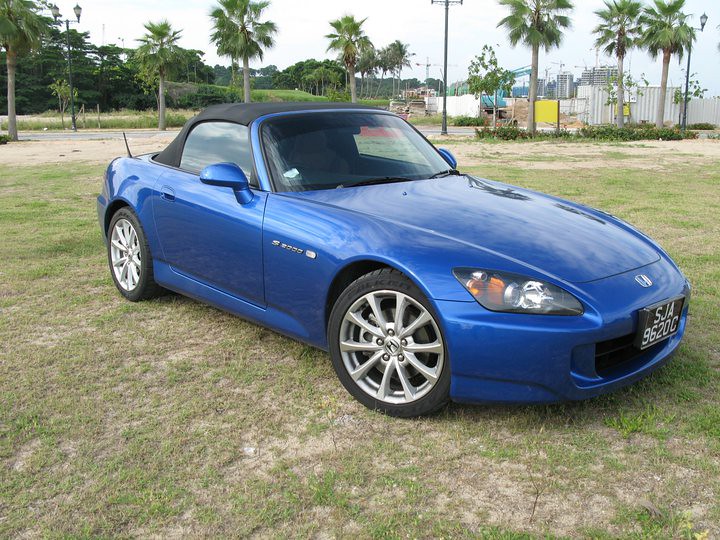
Racing with my S2000
Wednesday, May 23, 2012
Quick note on 2012 hopes
2012 has been a whirlwind of activity so far on the family & work front so I have been unable to devote any time to getting down to any race track events. I still hold hopes for the later part of the year for me to get some way down to working out the setup (and any necessary changes) and most importantly to get precious seat time on the track. To say I may have lost touch with the track is probably putting it lightly but I think with some effort and focus, I should be able to get some progress.
My friend and tuner has kindly volunteered to join me for a shakedown session to render any advice or assistance while other good friends have been equally supportive. I'd like to believe that the reason they are so forthcoming is that they discern my genuine desire to grow as a driver. My wife has been very supportive throughout and we jointly agreed to attend to more pressing priorities first before I get back to the track. Life has twists nd turns but coping with the changes while not losing sight of your passions is very important, even so as driving is pretty much my sole passion.
On a side note, I have decided to cease active involvement with a certain group and reduce interaction to the bare minimum as I realized how untenable relations have become. I have always been open with sharing and helping but if I am to face potential negative impact (even possibly spreading to career impact) then it is simply no longer possible to continue. I had been inspired by the open culture of the scene overseas where I had received advice and help without restraint while being free to give and open to accept criticisms. Trolling, profit scheming and narrow minded bullying manners were quickly chided yet it is regrettable that such positive ways mostly never found their way past off the shores they originated. Perhaps it is simply a culture I do not fit into.
Hereon, I'm eagerly awaiting my chance to get into the seat or some proper driving and dearly praying things run smoothly until then so I can at least do one or two competitive events come year end. Wish me luck!
Tuesday, February 28, 2012
Set Up Part 4: Suspension & Handling for the AP2 S2000
The S2000 is blessed with the combination of a stiff chassis with race derived suspension design which makes it a very able candidate for the building of a race track performer. Having come from a coilover equipped 4WD turbocharged sports sedan, I did feel there was some room for improvement in the overall setup as it seemed to me that the shortfalls in the production car were attempting to address both sporty handling while hoping to still provide a modicum of comfort within the production budget of the car. It suffices to say that the final result may not have won many fans on either end of the spectrum. I decided to focus my attention on building handling to optimize it's track ability eschewing the comfort part of the equation as this car would spend much of its time at the track.
The tyres on the stock S2000 are the Bridgestone RE050, which must not be confused with the more grippy Bridgestone RE050A, and come in 215/45/17 front 245/40/17 rear. Feeling that the front lacked turn in and tyre grip, I decided to go for a non-staggered setup with 255/40/17 tyres all around which I have detailed here . The result was vastly improved turn in and grip far above what the stock tyre configuration could achieve. Realizing that tyres are probably the most critical part of the suspension, I went with the choice of the razor sharp feeling Advan Neova AD08 which cost me about 380 SGD per piece. An all round performer, this tyre wears at a very reasonable rate while delivering class leading wet & dry grip even when worn down past the tread markers.
Next up, I focused on the suspension and since my heavy track use over the last few years had pretty much worn out the stock suspension, I decided to replace this with a six month old second hand set of Tein Super Racing Circuit (SRC for short) Master coilovers which I had managed to purchase from a fellow S2000 track buddy. Brands such as KW, JIC, Bilstein and Ohlins had suspension models selling in the 3000 SGD range that I did consider but realized that since the suspension choice would be crucial for my handling on the track, it would be best to go with a suspension that has been proven on the track. I did briefly look at the Ohlins TTX but this quality comes with a very steep price and I rationalized that I would not have much left over to develop the rest of the car should I opt for these.
My choice of the Tein SRC's come with 16kg/mm spring rates front and rear which may seem overly stiff for the street yet damping seems to be relatively compliant which makes it bearable in terms of comfort while managing the bumps of the street pretty well. The recommended ride heights for the Tein SRC are far too low to be running daily on the street so I have had the suspension raised to clear day to day driving with the aim to lower the car as recommended the next time I hit the track. The external canister design of the shocks helps cool the suspension and the short stroke design of the suspension is clearly a track derived design originating from the Tein N1 race coilovers. Although I have not had very long track sessions on this suspension due to unfortunate disruptions in my track schedule, I am confident from the winning track record of s2ki.com competitive trackies that this will be a key component to help me outhandle the competition.
With the non staggered setup that I am running, the alignment I run would correspondingly need to be altered to match. After researching on many settings for camber and toe, I finally settled on a setup with the following numbers:
Front Camber 3.0
Front Toe 0
Caster : Max (usually ~6-6.25)
Rear Camber 3.0
Rear Toe 0'20 per side
These settings are subject to change as I have purchased a LongAcre probe type pyrometer to help determine how well this alignment suits the overall setup of my car. The pyrometer will also put certainty into determining optimum tyre pressures at the track when properly utilized and is thus a crucial investment in sorting out handling. It is rather surprising that little to no people I know actually venture to use a probe type pyrometer to determine and tune optimal alignment/tyre pressure settings which points once again in inherent gaps in the approach in local motorsports with regards to building competitive setups. I have not mentioned any changes to sway bars or stiffening structural bars and the like as it is my opinion that outside of building a full roll cage, the car would not appreciably improve from such fitments. This thought is once again shaped heavily by feedback from s2ki.com amateur racers who openly discuss their winning setups to share with the local community.
I would like to share some thoughts about how my approach to tuning or setting up the car was viewed by "old birds" in the local community as I find a significant gap in the thought process as opposed to search for actual performance when I discussed my setup in the local community. Most make their decision on a brand before even looking into what technology the brand accesses and if that is cost effective to deliver the end result desired. I will not go into length about how many times I faced derision on taking a path atypical from most FR setups (sometimes this derision was backed up by shockingly flawed theory!) but understanding that it is the malaise of the local industry to focus on fiction (hearsay) above fact, I soldiered on resolutely. In short, the typical local build up of a car is a piecemeal bit by bit addition process that is usually disjointed and not particularly focused while relying on potentially outdated theories (often from hearsay) to base the build on.
I hope that the fact that I do specific targeted research to focus my efforts on the current build allows the true potential of the S2000 to be realized with valid fact to back up the principles underpinned. Being heavily influenced by the open ways of the folks on s2ki.com, I look to share my knowledge through the above series of set up pieces and help any S2000 owners on their journey to enhancing the performance above their stock S2000.
The tyres on the stock S2000 are the Bridgestone RE050, which must not be confused with the more grippy Bridgestone RE050A, and come in 215/45/17 front 245/40/17 rear. Feeling that the front lacked turn in and tyre grip, I decided to go for a non-staggered setup with 255/40/17 tyres all around which I have detailed here . The result was vastly improved turn in and grip far above what the stock tyre configuration could achieve. Realizing that tyres are probably the most critical part of the suspension, I went with the choice of the razor sharp feeling Advan Neova AD08 which cost me about 380 SGD per piece. An all round performer, this tyre wears at a very reasonable rate while delivering class leading wet & dry grip even when worn down past the tread markers.
Next up, I focused on the suspension and since my heavy track use over the last few years had pretty much worn out the stock suspension, I decided to replace this with a six month old second hand set of Tein Super Racing Circuit (SRC for short) Master coilovers which I had managed to purchase from a fellow S2000 track buddy. Brands such as KW, JIC, Bilstein and Ohlins had suspension models selling in the 3000 SGD range that I did consider but realized that since the suspension choice would be crucial for my handling on the track, it would be best to go with a suspension that has been proven on the track. I did briefly look at the Ohlins TTX but this quality comes with a very steep price and I rationalized that I would not have much left over to develop the rest of the car should I opt for these.
My choice of the Tein SRC's come with 16kg/mm spring rates front and rear which may seem overly stiff for the street yet damping seems to be relatively compliant which makes it bearable in terms of comfort while managing the bumps of the street pretty well. The recommended ride heights for the Tein SRC are far too low to be running daily on the street so I have had the suspension raised to clear day to day driving with the aim to lower the car as recommended the next time I hit the track. The external canister design of the shocks helps cool the suspension and the short stroke design of the suspension is clearly a track derived design originating from the Tein N1 race coilovers. Although I have not had very long track sessions on this suspension due to unfortunate disruptions in my track schedule, I am confident from the winning track record of s2ki.com competitive trackies that this will be a key component to help me outhandle the competition.
With the non staggered setup that I am running, the alignment I run would correspondingly need to be altered to match. After researching on many settings for camber and toe, I finally settled on a setup with the following numbers:
Front Camber 3.0
Front Toe 0
Caster : Max (usually ~6-6.25)
Rear Camber 3.0
Rear Toe 0'20 per side
These settings are subject to change as I have purchased a LongAcre probe type pyrometer to help determine how well this alignment suits the overall setup of my car. The pyrometer will also put certainty into determining optimum tyre pressures at the track when properly utilized and is thus a crucial investment in sorting out handling. It is rather surprising that little to no people I know actually venture to use a probe type pyrometer to determine and tune optimal alignment/tyre pressure settings which points once again in inherent gaps in the approach in local motorsports with regards to building competitive setups. I have not mentioned any changes to sway bars or stiffening structural bars and the like as it is my opinion that outside of building a full roll cage, the car would not appreciably improve from such fitments. This thought is once again shaped heavily by feedback from s2ki.com amateur racers who openly discuss their winning setups to share with the local community.
I would like to share some thoughts about how my approach to tuning or setting up the car was viewed by "old birds" in the local community as I find a significant gap in the thought process as opposed to search for actual performance when I discussed my setup in the local community. Most make their decision on a brand before even looking into what technology the brand accesses and if that is cost effective to deliver the end result desired. I will not go into length about how many times I faced derision on taking a path atypical from most FR setups (sometimes this derision was backed up by shockingly flawed theory!) but understanding that it is the malaise of the local industry to focus on fiction (hearsay) above fact, I soldiered on resolutely. In short, the typical local build up of a car is a piecemeal bit by bit addition process that is usually disjointed and not particularly focused while relying on potentially outdated theories (often from hearsay) to base the build on.
I hope that the fact that I do specific targeted research to focus my efforts on the current build allows the true potential of the S2000 to be realized with valid fact to back up the principles underpinned. Being heavily influenced by the open ways of the folks on s2ki.com, I look to share my knowledge through the above series of set up pieces and help any S2000 owners on their journey to enhancing the performance above their stock S2000.
Tuesday, February 21, 2012
Set Up Part 3: Braking in the S2000
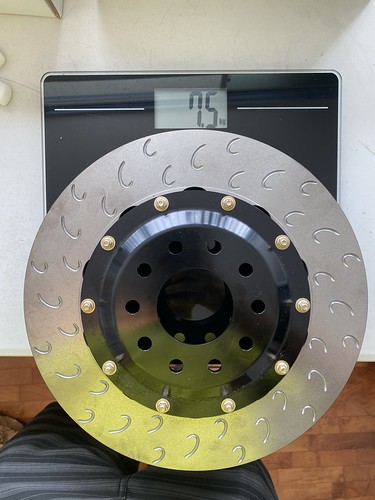
Consistent and good braking power is of critical importance at the track as it allows you to carry as much speed as possible from the straight, helps you to turn in certain corners, allows you to dictate position when challenging for a corner and helps you allow the car to take a set before the corner entry to be as stable as possible. An optimum combination of pads, fluids, brake lines and discs used in consideration of the conditions the brake system, as a whole, will be exposed to will be necessary to achieve the desired braking. The stock brake system on the S2000 has pads & fluids which are not equipped to take the stress of track racing while the rotors may crack frequently if heat management modifications are not undertaken.
I decided to modify the stock brake system to suit my track use as opposed to replace it with an aftermarket big brake kit due to the massive cost that a brake system would entail which would be in excess of 5500 SGD just for the front set. The other 2 reasons why I chose to stay with the OEM stock caliper setup would be that most aftermarket brake kits only sell brake kits for the front whilst those that sell kits for the rear are either extremely expensive (exceeding 1500 SGD) or sell a kit that deletes the hand brake mechanism & the fact that staying with the OEM calipers allows me to keep the stock brake balance thereby removing an additional variable in troubleshooting brake related issues.
I opted to use quality brake fluid by Motul, currently RBF660, which has high fade resistance together with braided steel brake lines on slotted OEM discs. This setup combined with Ferodo Racing DS2500 brake pads, has proven relatively reliable when coupled with the grip of the stock suspension and Federal 595SS budget tyres while being able to deliver approximately 1G of straight line braking on both of the long braking zone of my local circuit. These results were with the addition of a brake ducting system, as previously discussed here, which helped stave away fluid fade in most part. The choice of the brake pad did give me rather low, although easy to modulate, bite especially when track temps were high although pad fade/degradation would eventually rear its ugly head.
With recent upgrades to a track focused coilover, high downforce aerodynamics, higher speeds capable on the straights due to an increase in the power of my car and much gripper performance tyres, I have decided to look for high performance pads which are able to give high consistent bite throughout the heat range. I had used Seido-ya N1 500 pads but the compound was extremely heavy on disc wear which is not comparable performance when considering the advances in ceramic brake pad technology which can give good pad/disc wear, flat torque and high bite throughout the heat range.
Options considered were the Pagid RS19 and Ferodo DS 1.11 as there was a possibility to get these in both front and rear sets as opposed to most major brands which only sell performance pads for the fronts. Having the same front and rear compound is important in my view when your car is of a 50-50 weight balance much like the S2000 so you can maximize the braking potential at both ends of the car. This will help bring out one of the comparative advantages that the S2000 commands in terms of braking.
Monday, February 20, 2012
Set Up Part 2: Aerodynamics of the S2000
Big leaps in aerodynamic improvements on road cars have been made in the span of the recent two decade. Items like the "shark tooth" vortex generator, rear underbody diffusers & specially designed front bumpers aiming to reduce drag have made their appearance on virtually every part of the spectrum of modern road cars. In comparison, the S2000's 1999 design has remained virtually unchanged even until its end in 2009 with the exception of the Type S.
The combination of the boxy shape of the front end, relatively high angle of the front windscreen and the lack of a rear diffuser exposing the rear bumper to collecting underbody air flow culminate to a Cd around 0.34. Certain modern sports cars also have Cd's of around 0.34 but usually incorporate aerodynamic aids to increase downforce at the expense of some drag yet the S2000 has little to none of these and thus generates large amount of lift at higher speeds. It suffices to say that aerodynamics would be one area where the S2000 falls short when compared to the current models of sports cars.
Lowering any car will improve aerodynamics significantly and this would be done by my change of suspension to a high end coil over suspension yet the problem of overall lack of downforce would still need to be addressed with further modifications. I decided that a combination of a front lip or splitter and rear wing would be the first changes needed to be done to add downforce, hopefully without a huge increase in the Cd.
OEM options to increase downforce on the front of the car included the Honda Modulo lip and the Type S (or CR) front splitter but I ruled both of these out as I felt that a splitter extending out from the bumper would be a more effective way to generate downforce. This effectiveness comes from the pressure created on the top of the splitter to push the splitter down and air flow underneath the splitter which helps to suck the splitter down.
The APR carbon fiber splitter extending about 2.5 inches from the front of my bumper was my choice but decided against mounting the splitter on the bumper which is a typical fitment by most buyers. This is because I have had feedback from folks running on high speed tracks that the additional downforce created could be so high that it could cause huge pressure on the bolts holding the bumper on and in some cases even tear the bumper off. My decision was then to mount the splitter to the chassis with the construction of a splitter frame bolted to the splitter. This had a two fold benefit: 1. To create a frame strong enough to hold the splitter firm during high downforce situations 2. To create a linear increase in downforce transfer to the chassis. The result after fitment was noticeably large amounts of grip which increased with the higher speeds I drove.
The next on the list would be the hunt for a rear wing which my S2000, being a non-Type S version, did not come with from the factory. Various choices abound for the S2000 including even chassis mounted offerings but needing to balance the need for the boot (for carrying of my spare tyre to the track) with best available downforce ability, I chose a Voltex wing for my car. I selected Voltex Type 2 with a 1600mm wingspan over a Voltex Type 3 as my car would fall under the lower power category and the drag from the Type 3 might be excessive compared to the acceleration ability of my car.
To enhance the downforce capability of the Type 2 wing, I had it mounted the highest available mounting at 275mm to put the wing in the cleanest airflow above the profile of the car. Looking at wind tunnel tests on the S2000 showed me that the high windscreen of the S2000 does necessitate a high mounting for a rear wing to be effective. I also specified a gurney flap (or wickerbill) to be included to be fitted to the wing which would increase downforce without a large increase in drag. The result of the fitment of the wing was a significant improvement in high speed stability to a point that high speed corners that usually made the tail feel light and prone to oversteer now could be taken with more aggression with the large increase in grip delivered by the wing.
I did not feel a noticeable increase in drag at with the aerodynamic setup and a check of my fuel consumption showed little or no difference in my fuel consumption on day to day highway driving so I am pretty satisfied with the balance of grip and drag offered by this setup. Setting of the wing rake or Angle Of Attack would need more frequent track sessions for me to determine what would be optimum so I will need to wait until later this year to get a bit more feedback. The key point I have learnt with aerodynamic modifications is the need to balance the grip you add to the chassis as too much front or rear grip will result in a significant bias to the car's balance which could lead to a poor handling at speed.
The final part I added to my S2000 to enhance aerodynamics was a Mugen FRP hard top. The soft top of the car flapping in the wind combined with the ribbed profile of the soft top mechanism disrupts the airflow above the car and causes drag which a hard top would reduce. This would increase the Cd and may significantly reduce the effectiveness of a rear wing. The OEM hard top is slightly heavier with a bigger glass rear windscreen but is more expensive to purchase locally and probably slightly less aerodynamic in my view. Being given a good offer for the Mugen FRP hard top, I decided to bite the bullet on the high cost and go for it. To be honest, I am not able to discern the aerodynamic gain of the hard top as I have had some other modifications done at the same time but feedback from various owners who kept everything else the same while changing to a hard top reported improved gas mileage coming from the improvement in aerodynamics.
The final item I am toying with getting to further improve the rear aerodynamics would be the addition of the rear diffuser but as I do not want to run too far off the budget I've set for myself, I am still putting that move on hold for the moment. There is also a concern on streetability as the low ride height of the S2000 (especially since I am on a race derived coilover suspension) might result in damage to the parts after contact with humps. Companies such as Spoon, Downforce and J's Racing do have splitter setups for the S2000 costing slightly more than 1000 SGD.
Sunday, February 19, 2012
Set Up Part 1: Engine power in the AP2 S2000
Coming in at 240bhp from the factory form, the 2.2 litre F22C in the AP2 2000 is already highly tuned with a power to displacement ratio of 109 bhp/litre. This is why many S2000 owners tend to feel that additional modifications to intake, exhaust and header do not give huge increases in output for the amount of money spent.
An example based on local pricing shows that a combined cost of a combination of possibly the best performing intake, header and exhaust for the S2000 tuned with a Hondata Flashpro may cost upwards of 7500 SGD. This would likely yield gains of around 40hp at best which seems pretty low on the bang to buck scale compared to similar but lower cost setups on the K series VTEC engines. If we, however, look at the absolute power to displacement ratio post modifications, we can see that approximately 280 bhp for a 2.2 litre gives us 127 bhp/litre which is in itself already a high level of tuning for a naturally aspirated engine.
Going further than 280-290 bhp naturally aspirated would require significant work on the engine and consequently cost a fair amount. Estimated costs for an engine rebuild up to a 2.4 litre setup, individual throttle body intake, standalone ECU and required engine headwork would probably exceed 20,000 SGD. To go to these levels of performance at this cost will require a huge commitment on the part of the owner and at this stage, it is probably relevant to consider your long term goals versus the budget allotted for the car's running or upgrades.
In my case, I have decided that the current level of 280-290bhp would be sufficient to run longer term and reliably on the track as I retain stock compression ratios and most of my modifications are simply bolted on with a tune. Although I will not have performance numbers like 12.X quarter miles numbers to boast, my personal view is that the strength of the S2000 has never been in its engine power but rather in the handling potential of the chassis thus spending should correspondingly focus on highlighting its strength in that area.
Sunday, September 18, 2011
My writing for s2ki.com
Of late, I have been more involved in off track activities such as writing for s2ki.com as a part of their News team. As an editor, I proof read and give suggestions on articles which are contributed by various members of the News team while contributing as often as I can with my own articles. I would consider any and all of my writings there as a joint effort by the hard working and committed News team folks. They have been nothing but welcoming and open even though we are separated by thousands of miles and have only chatted online before so it is my greatest pleasure to be working on this mini-project role with them.
Here are a list of my articles to date:
http://www.s2ki.com/home/2011/09/19/add-lightness/ (LATEST)
http://www.s2ki.com/home/2011/09/10/brake-ducting/
http://www.s2ki.com/home/2011/08/26/got-downforce/
http://www.s2ki.com/home/2011/07/22/to-hold-and-drive-forever/
http://www.s2ki.com/home/2011/06/25/a-reliable-sports-car/
http://www.s2ki.com/home/2011/06/10/heel-toe-or-heck-no/
http://www.s2ki.com/home/2011/05/16/what-safety-equipment-do-you-pack-for-the-track/
http://www.s2ki.com/home/2011/05/11/are-s2000s-racing-competitively-worldwide/
Happy reading! :)
Here are a list of my articles to date:
http://www.s2ki.com/home/2011/09/19/add-lightness/ (LATEST)
http://www.s2ki.com/home/2011/09/10/brake-ducting/
http://www.s2ki.com/home/2011/08/26/got-downforce/
http://www.s2ki.com/home/2011/07/22/to-hold-and-drive-forever/
http://www.s2ki.com/home/2011/06/25/a-reliable-sports-car/
http://www.s2ki.com/home/2011/06/10/heel-toe-or-heck-no/
http://www.s2ki.com/home/2011/05/16/what-safety-equipment-do-you-pack-for-the-track/
http://www.s2ki.com/home/2011/05/11/are-s2000s-racing-competitively-worldwide/
Happy reading! :)
Sunday, September 11, 2011
Brake ducting article on s2ki.com
I've had the honour of having my brake ducting article, albeit in a slightly revised fashion to be S2000 owner specific, posted up on s2ki.com as part of my ongoing effort as part of s2ki.com's News team. The News team is an excellent group of folks to work with and I've enjoyed every moment of contributing to s2ki.com which has helped me greatly as an S2000 owner over the years by being a treasure trove of S2000-related information resource. It has also allowed me to get to know some wonderful S2000 owners throughout the globe, making it truly an international forum in every way!
Here is the article in its revised form.
Faded brakes resulting in reduced stopping force remains a constant concern when attacking our favourite tracks. Spongy brake feel culminating in heart stopping moments and inability to brake well on the way back from the local track are typical. We spend hundreds, if not thousands, of dollars on modifications to increase the braking ability of our beloved rides and enjoy the results when tracking.
A moment of reflection leads us to ponder if this money was well spent. Could money saved on excessive brake modifications be better used on items such as better suspension or even other safety equipment? Let's examine, by way of cost benefit analysis, and discuss the effectiveness of current expenditure regarding braking modifications and their practical impact to track day enthusiasts.
A simple understanding of the brake system is necessary for us to begin. The friction generated between the brake pad and the rotating brake disc converts the energy of the moving vehicle into heat. The heat is lost through the surface area of the disc to air when the car is moving. Buildup of heat in the disc will mean that the generation of heat is at a rate higher than the ability of the braking system to dissipate the heat of the disc.
Faded brakes, spongy brake pedals, burnt discs and crumbling brake pads are all symptoms of a simple problem of accumulated heat overloading the braking system. I will use a virtually stock Honda S2000 (unmodified except for a bolt-on exhaust and slightly more aggressive alignment) tracked at Sepang International Circuit in Malaysia as a reference.
Tracking the S2000 on stock brake components proved a bad idea considering the searing 50°+ C (122°+ F) track temperatures. The stock brake pads quickly disintegrated with 80% thickness pads dropping to 10% in one 3-hour track session. The stock brake fluids boiled after a few laps and remained dangerously spongy even after a long rest in the pits. The brake discs turned a funny burnt tinge after a taxing session and smoke could be seen pouring off them on entry to the pits.
Upgrades to address these issues soon followed by way of Ferodo DS2500 brake pads (which are rated from 50° C to 750° C), stainless steel brake lines and Motul RBF 600 brake fluid for a total cost of about 800 SGD (equivalent to about $662 US) including labour cost (Note: Labour costs may vary from workshop to workshop). The rate of wear of the pads was halved and sponginess was staved away. Brake fluid changes could be done after every other track day although continuous lapping on the track was still limited to about five hot laps before the brake fade begin to significantly impact driving. The condition of the brake discs remained relatively unchanged.
This meant the heat overload experienced by the braking system had clearly not been significantly addressed. However, certain components were now able to handle the heat slightly better. A possible reference to how much deep braking was used was that the confidence level to begin threshold braking for Turn 1 was that the driver was confident to brake just before the 100m marker while still being able to make the corner for at least the first two or three hot laps of a full five lap outing from the pits. Braking that late for the remainder of the five laps was risky as brake fade had begun to appear and by the second half the entire three hour track session it was increasingly difficult to have more than one or two hot laps before the brakes began to feel extremely spongy.
The next step, to most of the tracking community, would certainly be obvious. To increase lapping longevity (to get as many hot laps per track session to maximize seat time), extensive brake modifications were necessary. 4-pot monoblock calipers, brake pads exceeding the current already high temperature ratings and bigger discs, at least for the front brakes (at a cost possibly ranging from 3000 to 5000 USD from brands such as Endless or AP Racing), would need to be fitted to generate more powerful and consistent braking.
There is no doubt on the benefits such modifications confer. However, would it be possible to have approximately 80-90% of the benefits at a lower cost? Tracking isn’t the cheapest of hobbies and being cheap on vital components, such as brakes, isn’t something most enthusiasts want to be seen doing and yet the cost of a “proper brake” upgrade system is clearly prohibitive to many. Perhaps we should examine more closely our desired brake performance objectives.
Upgraded stopping power is greatly desired. A simple explanation of braking “power” is that an increase in the braking “power” can be defined as a small application of force resulting in a larger than typical braking forces. One could upgrade the brake booster (master cylinder) to get this result or simply step harder on the brake pedal. The S2000 test car with stock tyres achieved over 1G of braking in straight line braking on the front straight without the use of a big brake kit so clearly there was no lack of braking power, however, a big brake kit would greatly improve modulation characteristics under threshold braking.
To address brake fade and a spongy brake pedal, another S2000 fitted a 4-pot big brake kit (including large calipers and upsized discs) from a leading brake manufacturer and achieved good consistent braking but fade still began to rear its ugly head by the end of the 3-hour track session. Brake fluids did boil a little less, fluid change intervals were slightly increased but three track sessions on the same fluids would probably be the absolute limit. A definite improvement, to be sure, but it was clear that the problem of fade still remained. Some other S2000s fitted with aggressive street brake pads and no ducting or only basic brake cooling setups tended to crack rotors much like the picture below.

The S2000 test car was then modified with a commonly overlooked modification, namely, brake ducts but remained entirely stock elsewhere with the exception of the brake fluid and brake pad changes as stated earlier. The initial setup was with ducts channeling air by a regular piping to the calipers on all four corners, evolved to add a funnel head on each pipe to concentrate air flow to the same four calipers and finally to a setup where both front and rear brake discs and calipers are individually cooled with their own piping.
Here is a picture of the front funnel setup:

Here are some pictures of the funnel setup leading to the caliper and disc:


Testing of the system was done over the course of a year with seven track days at both Sepang International Circuit and Johor Circuit, also in Malaysia, and the results were: With the same Ferodo DS2500 brake pads and Motul RBF 600 brake fluid on the stock brake system, brake pad life was increased to at least double of the usual service interval while discs ceased to smoke and exhibited no visible burn marks.
The result with the brake fluids was not only that sponginess was eliminated for all the track sessions and not evident on the 300km drive back to Singapore, over five laps could be easily done without a hint of fade, braking could be done consistently on every lap at the 100m marker without fade appearing and no change of fluids appeared necessary even after the seventh track day. The S2000 test car could now repeatedly do multiple stints of over 15 hot laps without fade on the stock calipers and discs which is clearly a huge improvement in fade resistance over even usage of an expensive big brake kit.
An added potential benefit, which is not immediately evident, could be that of the heat being taken out of the drive train components (such as CV joints and wheel bearings) thus reducing the heat stress on them and possibly prolonging their lifespan. Usefulness of brake ducts is nothing new in racing (virtually every race car has them) but strangely a search within some aftermarket brands concluded that you will be hard pressed to find them selling an effective and comprehensive brake duct solution in their product ranges.
The downside of such a system would be some time spent to customize a proper system, maintenance of the fittings and probably some hindrance to certain modifications as the ducts would require some space to fit. The benefits are, however, numerous and obvious to the track enthusiasts. These would be namely, cost, maximizing seat (practice) time, safety and prolonging the lifespan of various components in the car.
Every track day enthusiast should consider having a brake duct system in place to complement their existing brake setup. The actual cost versus benefit result derived varies from car to car, the class of competition that the enthusiast is running in and with the type of brake duct system constructed.
What brake modifications have you performed on your S2000? Has that improved your braking performance?
Here is the article in its revised form.
Faded brakes resulting in reduced stopping force remains a constant concern when attacking our favourite tracks. Spongy brake feel culminating in heart stopping moments and inability to brake well on the way back from the local track are typical. We spend hundreds, if not thousands, of dollars on modifications to increase the braking ability of our beloved rides and enjoy the results when tracking.
A moment of reflection leads us to ponder if this money was well spent. Could money saved on excessive brake modifications be better used on items such as better suspension or even other safety equipment? Let's examine, by way of cost benefit analysis, and discuss the effectiveness of current expenditure regarding braking modifications and their practical impact to track day enthusiasts.
A simple understanding of the brake system is necessary for us to begin. The friction generated between the brake pad and the rotating brake disc converts the energy of the moving vehicle into heat. The heat is lost through the surface area of the disc to air when the car is moving. Buildup of heat in the disc will mean that the generation of heat is at a rate higher than the ability of the braking system to dissipate the heat of the disc.
Faded brakes, spongy brake pedals, burnt discs and crumbling brake pads are all symptoms of a simple problem of accumulated heat overloading the braking system. I will use a virtually stock Honda S2000 (unmodified except for a bolt-on exhaust and slightly more aggressive alignment) tracked at Sepang International Circuit in Malaysia as a reference.
Tracking the S2000 on stock brake components proved a bad idea considering the searing 50°+ C (122°+ F) track temperatures. The stock brake pads quickly disintegrated with 80% thickness pads dropping to 10% in one 3-hour track session. The stock brake fluids boiled after a few laps and remained dangerously spongy even after a long rest in the pits. The brake discs turned a funny burnt tinge after a taxing session and smoke could be seen pouring off them on entry to the pits.
Upgrades to address these issues soon followed by way of Ferodo DS2500 brake pads (which are rated from 50° C to 750° C), stainless steel brake lines and Motul RBF 600 brake fluid for a total cost of about 800 SGD (equivalent to about $662 US) including labour cost (Note: Labour costs may vary from workshop to workshop). The rate of wear of the pads was halved and sponginess was staved away. Brake fluid changes could be done after every other track day although continuous lapping on the track was still limited to about five hot laps before the brake fade begin to significantly impact driving. The condition of the brake discs remained relatively unchanged.
This meant the heat overload experienced by the braking system had clearly not been significantly addressed. However, certain components were now able to handle the heat slightly better. A possible reference to how much deep braking was used was that the confidence level to begin threshold braking for Turn 1 was that the driver was confident to brake just before the 100m marker while still being able to make the corner for at least the first two or three hot laps of a full five lap outing from the pits. Braking that late for the remainder of the five laps was risky as brake fade had begun to appear and by the second half the entire three hour track session it was increasingly difficult to have more than one or two hot laps before the brakes began to feel extremely spongy.
The next step, to most of the tracking community, would certainly be obvious. To increase lapping longevity (to get as many hot laps per track session to maximize seat time), extensive brake modifications were necessary. 4-pot monoblock calipers, brake pads exceeding the current already high temperature ratings and bigger discs, at least for the front brakes (at a cost possibly ranging from 3000 to 5000 USD from brands such as Endless or AP Racing), would need to be fitted to generate more powerful and consistent braking.
There is no doubt on the benefits such modifications confer. However, would it be possible to have approximately 80-90% of the benefits at a lower cost? Tracking isn’t the cheapest of hobbies and being cheap on vital components, such as brakes, isn’t something most enthusiasts want to be seen doing and yet the cost of a “proper brake” upgrade system is clearly prohibitive to many. Perhaps we should examine more closely our desired brake performance objectives.
Upgraded stopping power is greatly desired. A simple explanation of braking “power” is that an increase in the braking “power” can be defined as a small application of force resulting in a larger than typical braking forces. One could upgrade the brake booster (master cylinder) to get this result or simply step harder on the brake pedal. The S2000 test car with stock tyres achieved over 1G of braking in straight line braking on the front straight without the use of a big brake kit so clearly there was no lack of braking power, however, a big brake kit would greatly improve modulation characteristics under threshold braking.
To address brake fade and a spongy brake pedal, another S2000 fitted a 4-pot big brake kit (including large calipers and upsized discs) from a leading brake manufacturer and achieved good consistent braking but fade still began to rear its ugly head by the end of the 3-hour track session. Brake fluids did boil a little less, fluid change intervals were slightly increased but three track sessions on the same fluids would probably be the absolute limit. A definite improvement, to be sure, but it was clear that the problem of fade still remained. Some other S2000s fitted with aggressive street brake pads and no ducting or only basic brake cooling setups tended to crack rotors much like the picture below.

The S2000 test car was then modified with a commonly overlooked modification, namely, brake ducts but remained entirely stock elsewhere with the exception of the brake fluid and brake pad changes as stated earlier. The initial setup was with ducts channeling air by a regular piping to the calipers on all four corners, evolved to add a funnel head on each pipe to concentrate air flow to the same four calipers and finally to a setup where both front and rear brake discs and calipers are individually cooled with their own piping.
Here is a picture of the front funnel setup:

Here are some pictures of the funnel setup leading to the caliper and disc:


Testing of the system was done over the course of a year with seven track days at both Sepang International Circuit and Johor Circuit, also in Malaysia, and the results were: With the same Ferodo DS2500 brake pads and Motul RBF 600 brake fluid on the stock brake system, brake pad life was increased to at least double of the usual service interval while discs ceased to smoke and exhibited no visible burn marks.
The result with the brake fluids was not only that sponginess was eliminated for all the track sessions and not evident on the 300km drive back to Singapore, over five laps could be easily done without a hint of fade, braking could be done consistently on every lap at the 100m marker without fade appearing and no change of fluids appeared necessary even after the seventh track day. The S2000 test car could now repeatedly do multiple stints of over 15 hot laps without fade on the stock calipers and discs which is clearly a huge improvement in fade resistance over even usage of an expensive big brake kit.
An added potential benefit, which is not immediately evident, could be that of the heat being taken out of the drive train components (such as CV joints and wheel bearings) thus reducing the heat stress on them and possibly prolonging their lifespan. Usefulness of brake ducts is nothing new in racing (virtually every race car has them) but strangely a search within some aftermarket brands concluded that you will be hard pressed to find them selling an effective and comprehensive brake duct solution in their product ranges.
The downside of such a system would be some time spent to customize a proper system, maintenance of the fittings and probably some hindrance to certain modifications as the ducts would require some space to fit. The benefits are, however, numerous and obvious to the track enthusiasts. These would be namely, cost, maximizing seat (practice) time, safety and prolonging the lifespan of various components in the car.
Every track day enthusiast should consider having a brake duct system in place to complement their existing brake setup. The actual cost versus benefit result derived varies from car to car, the class of competition that the enthusiast is running in and with the type of brake duct system constructed.
What brake modifications have you performed on your S2000? Has that improved your braking performance?
Subscribe to:
Posts (Atom)